

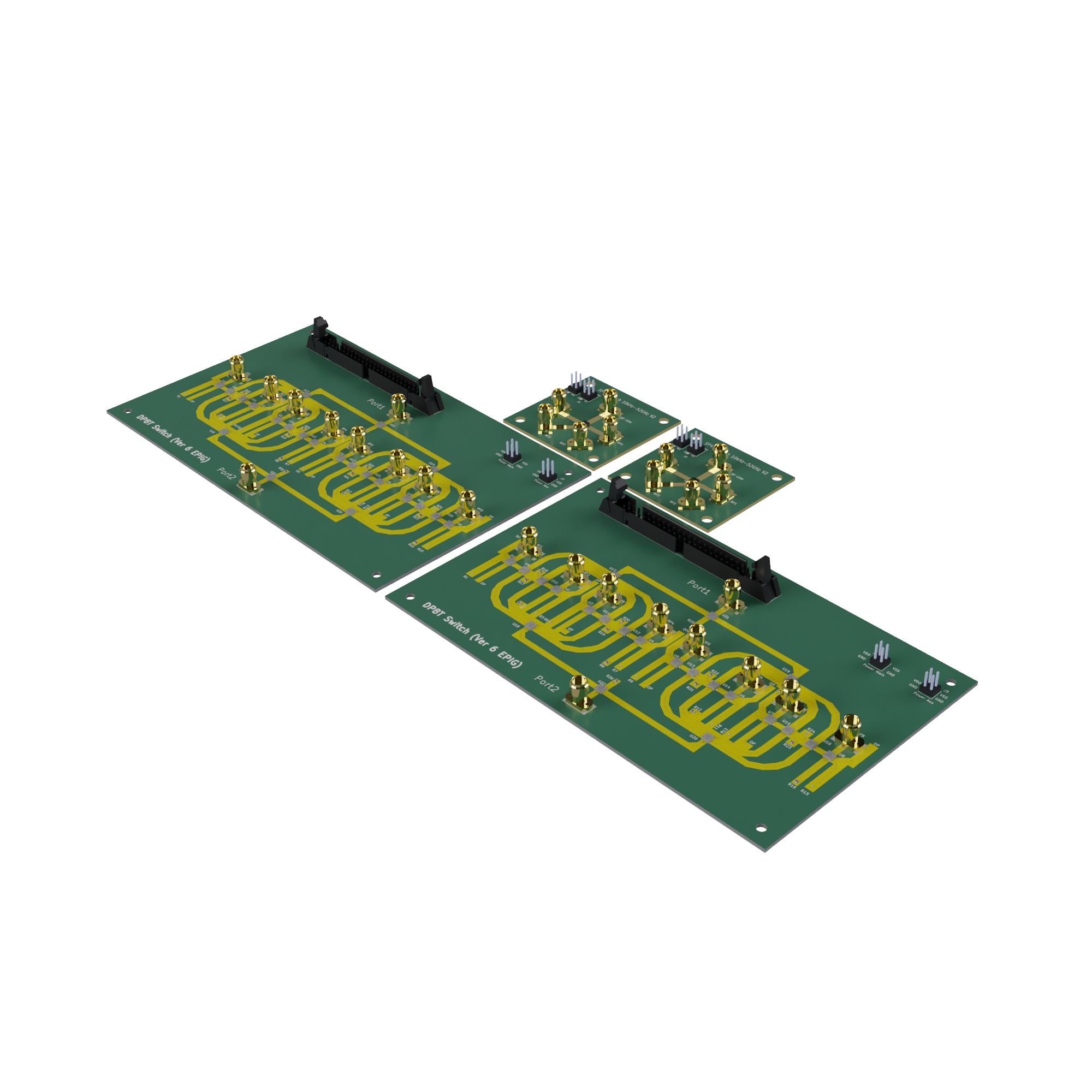
16-Port VNA extension unit
Price upon inquiry
VNA Extension Unit – Multi-Port Expansion for High-Frequency Measurement
Our VNA Extension Unit is engineered to expand the capabilities of traditional 2-port Vector Network Analyzers by transforming them into a fully functional 16-port measurement system—all while maintaining excellent signal integrity across a wide frequency range from 10 kHz to 52 GHz. This compact, high-performance accessory is ideal for users who require multi-port testing without investing in a dedicated multi-port VNA (which can run many tens of thousands of dollars).
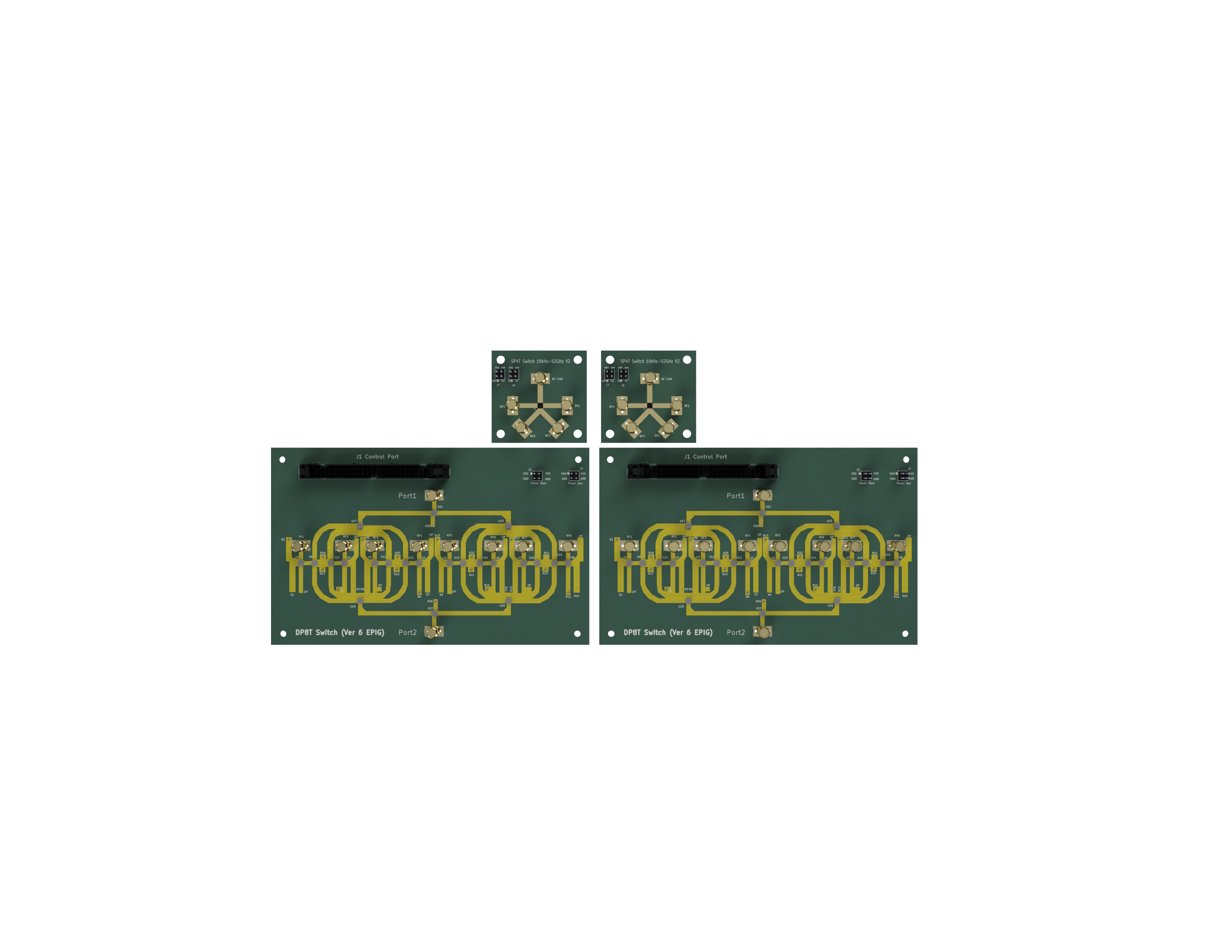
VNA Extension Unit – Multi-Port Expansion for High-Frequency Measurement
Our VNA Extension Unit is engineered to expand the capabilities of traditional 2-port Vector Network Analyzers by transforming them into a fully functional 16-port measurement system—all while maintaining excellent signal integrity across a wide frequency range from 10 kHz to 52 GHz. This compact, high-performance accessory is ideal for users who require multi-port testing without investing in a dedicated multi-port VNA (which can run many tens of thousands of dollars).
Purpose and Function
The VNA Extension Unit enables seamless port expansion by integrating a carefully designed cascade of solid-state RF switches. Through precision engineering and low-loss architecture, the unit effectively multiplies a 2-port VNA into eight selectable ports, allowing users to connect and characterize a broader set of devices or multi-port components with the equipment they already own.
Port selection and measurement routing are fully controllable via Python-based programming, enabling automated test sequences, rapid configuration changes, and integration into custom workflows or production environments.
Low-Loss Architecture and High Signal Integrity
The extension unit uses multiple layers of high-isolation, solid-state switches arranged to minimize insertion loss and preserve measurement accuracy at high frequencies. The last layer of switches—closest to the output ports—includes integrated 50-ohm, open, and short standards, ensuring:
Consistent and reliable calibration
Long-term stability of the measurement reference plane
Maintained signal integrity even with repetitive switching and extended use
This built-in calibration capability helps users achieve confidence in their S-parameter results over time without requiring external fixtures or constant recalibration.
Wide Operating Temperature Range
Designed for rugged test environments, production lines, and field applications, the unit operates reliably across a broad temperature range of –40°C to +105°C, ensuring stable performance even in demanding conditions.
Key Features:
Expands a 2-port VNA to 16 usable test ports
Wideband operation: 10 kHz to 52 GHz
Python-controlled port switching for automation and scripting
Low-loss, solid-state switching architecture for high-accuracy measurements
Integrated 50Ω, open, and short elements for stable, repeatable calibration
Rugged, temperature-stable design for –40°C to 105°C operation
Ideal for multi-port device testing, automated test systems, phased arrays, and R&D labs
Controllable from python using a standalone Qubit Microwave driver board or other microcontrollers systems.
Purpose and Function
The VNA Extension Unit enables seamless port expansion by integrating a carefully designed cascade of solid-state RF switches. Through precision engineering and low-loss architecture, the unit effectively multiplies a 2-port VNA into eight selectable ports, allowing users to connect and characterize a broader set of devices or multi-port components with the equipment they already own.
Port selection and measurement routing are fully controllable via Python-based programming, enabling automated test sequences, rapid configuration changes, and integration into custom workflows or production environments.
Wide Operating Temperature Range
Designed for rugged test environments, production lines, and field applications, the unit operates reliably across a broad temperature range of –40°C to +105°C, ensuring stable performance even in demanding conditions.
Low-Loss Architecture and High Signal Integrity
The extension unit uses multiple layers of high-isolation, solid-state switches arranged to minimize insertion loss and preserve measurement accuracy at high frequencies. The last layer of switches—closest to the output ports—includes integrated 50-ohm, open, and short standards, ensuring:
Consistent and reliable calibration
Long-term stability of the measurement reference plane
Maintained signal integrity even with repetitive switching and extended use
This built-in calibration capability helps users achieve confidence in their S-parameter results over time without requiring external fixtures or constant recalibration.
Key Features
Expands a 2-port VNA to 16 usable test ports
Wideband operation: 10 kHz to 52 GHz
Python-controlled port switching for automation and scripting
Low-loss, solid-state switching architecture for high-accuracy measurements
Integrated 50Ω, open, and short elements for stable, repeatable calibration
Rugged, temperature-stable design for –40°C to 105°C operation
Ideal for multi-port device testing, automated test systems, phased arrays, and R&D labs
Controllable from python using a standalone Qubit Microwave driver board or other microcontrollers systems.

Made in the USA
At Qubit Microwave, we strive for the highest quality products. All designs are fabricated in the USA, enabling streamlined production and competitive pricing without foreign tariffs.